

September 17, 2026
HSE University UNESCO Chair on Future Studies Represents Russia at UNESCO Seminar on Quantum Technologies
On 16 September 2026, UNESCO held the online seminar "Quantum Science and the Future of Quantum Technologies" as part of its Futures Dialogues series. Professor Alexander Sokolov, Head of the UNESCO Chair on Future Studies at HSE University, represented the Russian Federation on the panel.
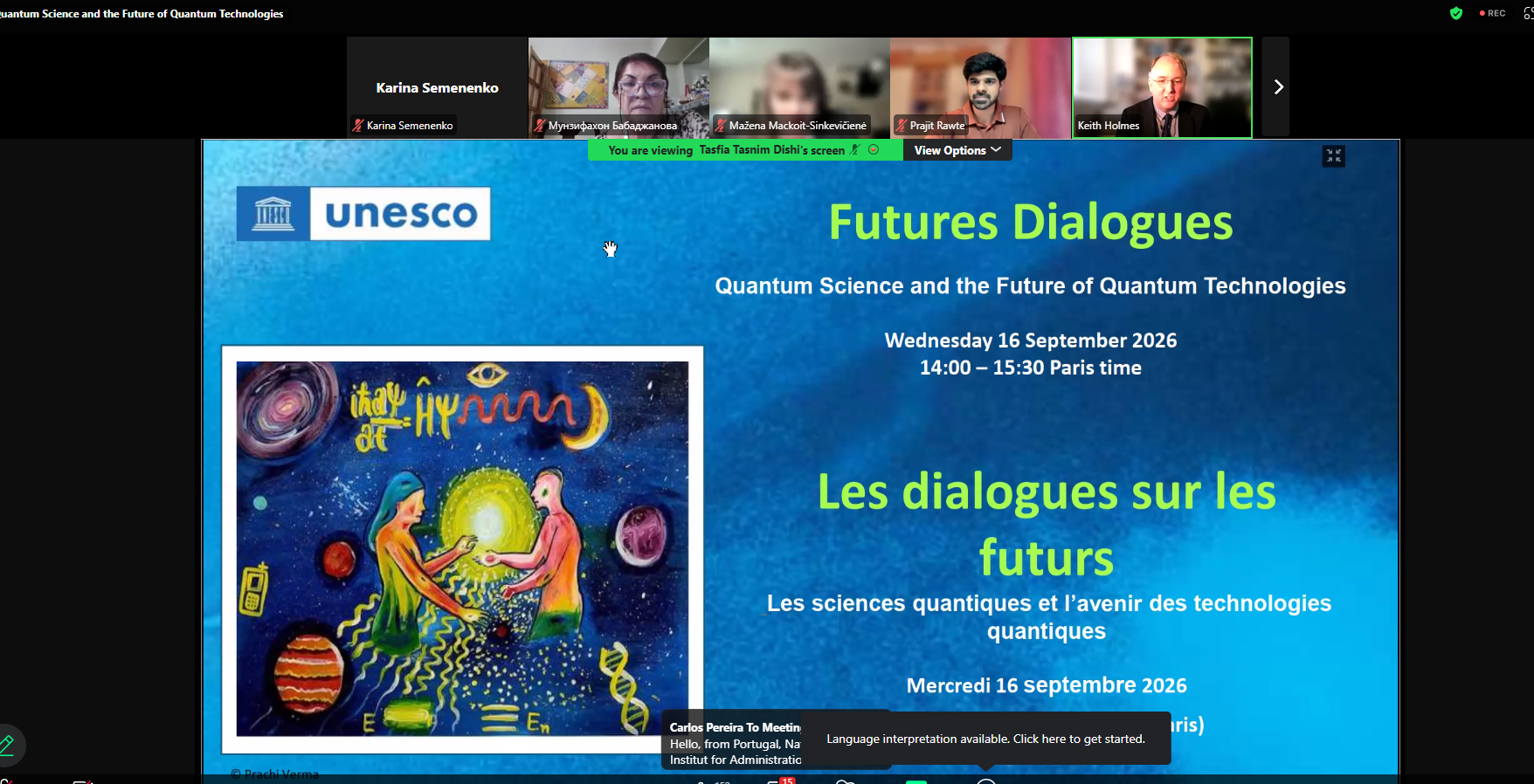
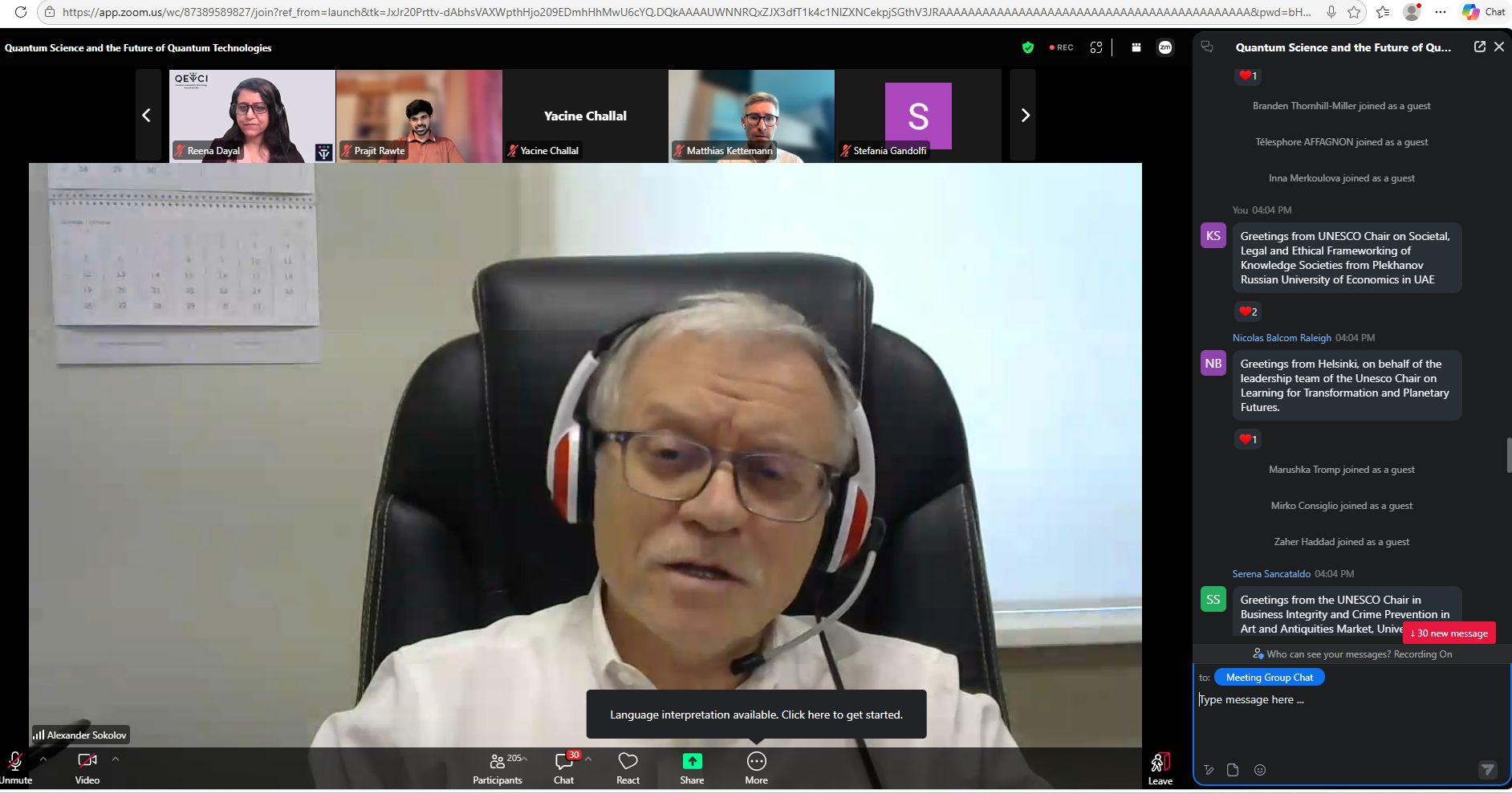
On 16 September 2026, UNESCO held the online seminar "Quantum Science and the Future of Quantum Technologies". The event was part of the Futures Dialogues series, in which UNESCO and experts explore long-term perspectives for education, the sciences, culture and communication.
The seminar brought together scientists, ethics experts, educators and policymakers. They discussed the future of quantum computing, quantum communications and cryptography, and quantum sensing and metrology. A central question was how to keep these technologies from widening inequality between countries, a risk UNESCO describes as the "Quantum Divide". UNESCO's response is the Global Quantum Initiative (2026-2028), an open multilateral platform for international dialogue, capacity building and collaborative research.
The agenda covered three themes. The first was bridging the quantum knowledge gap and strengthening STEM education in the Global South. The second was ethical governance and security, building on the COMEST Report on the Ethics of Quantum Computing. The third was open science and global scientific cooperation.
The Russian Federation was represented on the panel by Alexander Sokolov. He is Deputy Director of the Institute for Statistical Studies and Economics of Knowledge (ISSEK) at HSE University, Director of the ISSEK International Research and Educational Foresight Centre, and Head of the UNESCO Chair on Future Studies at HSE University. Professor Sokolov spoke about how the world will change once quantum computers become widely accessible.
He was joined on the panel by:
Malik Maaza, iThemba LABS (National Research Foundation of South Africa) and UNESCO Chair on Nanoscience and Nanotechnology, University of South Africa;
Matthias Kettemann, University of Innsbruck, Vice-Chair of UNESCO's World Commission on the Ethics of Scientific Knowledge and Technology (COMEST);
Reena Dayal, Founder and CEO of the Quantum Ecosystems and Technology Council of India (QETCI).
The discussion was moderated by Amal Kasry, Chief of Basic Sciences, Engineering, Technology and Innovation, UNESCO Sciences Sector.
The UNESCO Chair on Future Studies at HSE University is part of the Russian network of UNESCO Chairs and the global network of UNESCO Futures Literacy Chairs.