

June 25, 2026
"Higher education in an international environment: impact and recognition": a round table in the framework of studying the ways to achieve the global goal of sustainable development: SDG 4. Ensure inclusive and equitable quality education
On June 24, 2026, at the National Research University of Science and Technology (MISIS), Moscow, the UNESCO Chair on Comparative Studies of Higher Education Quality, led by Dr. Viktor Kruglov, organized a round table entitled "Higher education in an international environment: influence and recognition."
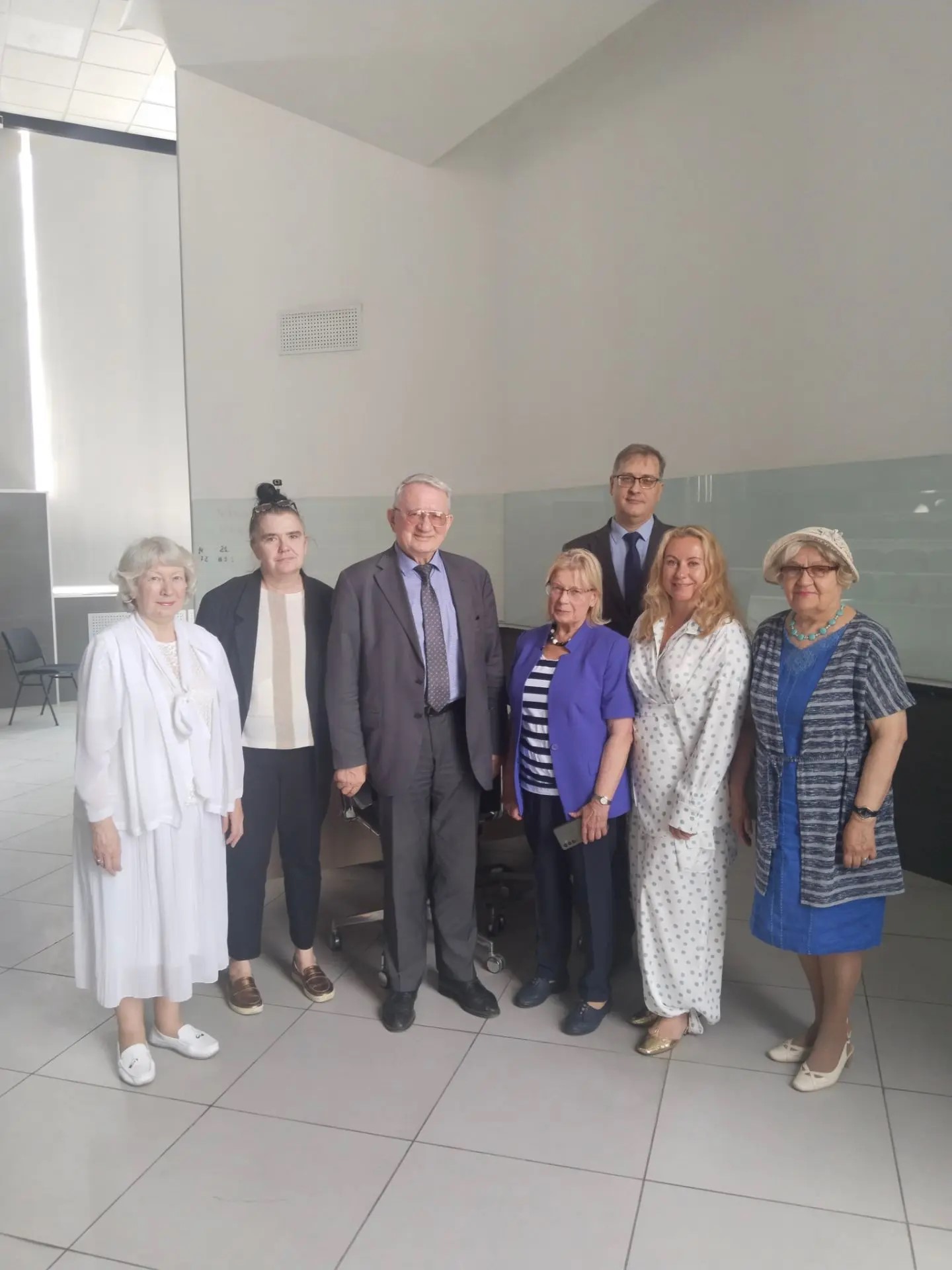
On June 24, 2026, at the National Research University of Science and Technology (MISIS), Moscow, the UNESCO Chair on Comparative Studies of Higher Education Quality, led by Dr. Viktor Kruglov, organized a round table entitled "Higher education in an international environment: influence and recognition." The event brought together russian and foreign UNESCO experts to discuss issues of ensuring the quality of education and its role in achieving the UN Sustainable Development Goals.
Noah Webster Sobe, Appointed Coordinator in the UNESCO education sector, Chief of Section for Higher Education, delivered a speech at the opening of the round table. Mr. Sobe stressed that achieving Sustainable Development Goal 4 (SDG 4) directly depends on an integrated approach to assessing the quality of higher education, including its perception at the national level, presentation on international platforms and objective assessment in a globally competitive environment, as well as addressing issues of mutual recognition of educational systems and documents, namely These aspects should be the subject of a practical discussion at the round table.
During the discussion, the participants considered the issues of finding a balance between national interests and the requirements of global competitiveness of educational programs in different countries, as well as an analysis of various mechanisms for international recognition of qualifications, from national accreditations to global ratings. They also discussed ways to increase academic mobility and harmonize educational standards in the new geopolitical realities.
Welcoming remarks were addressed to the participants and organizers of the event by:
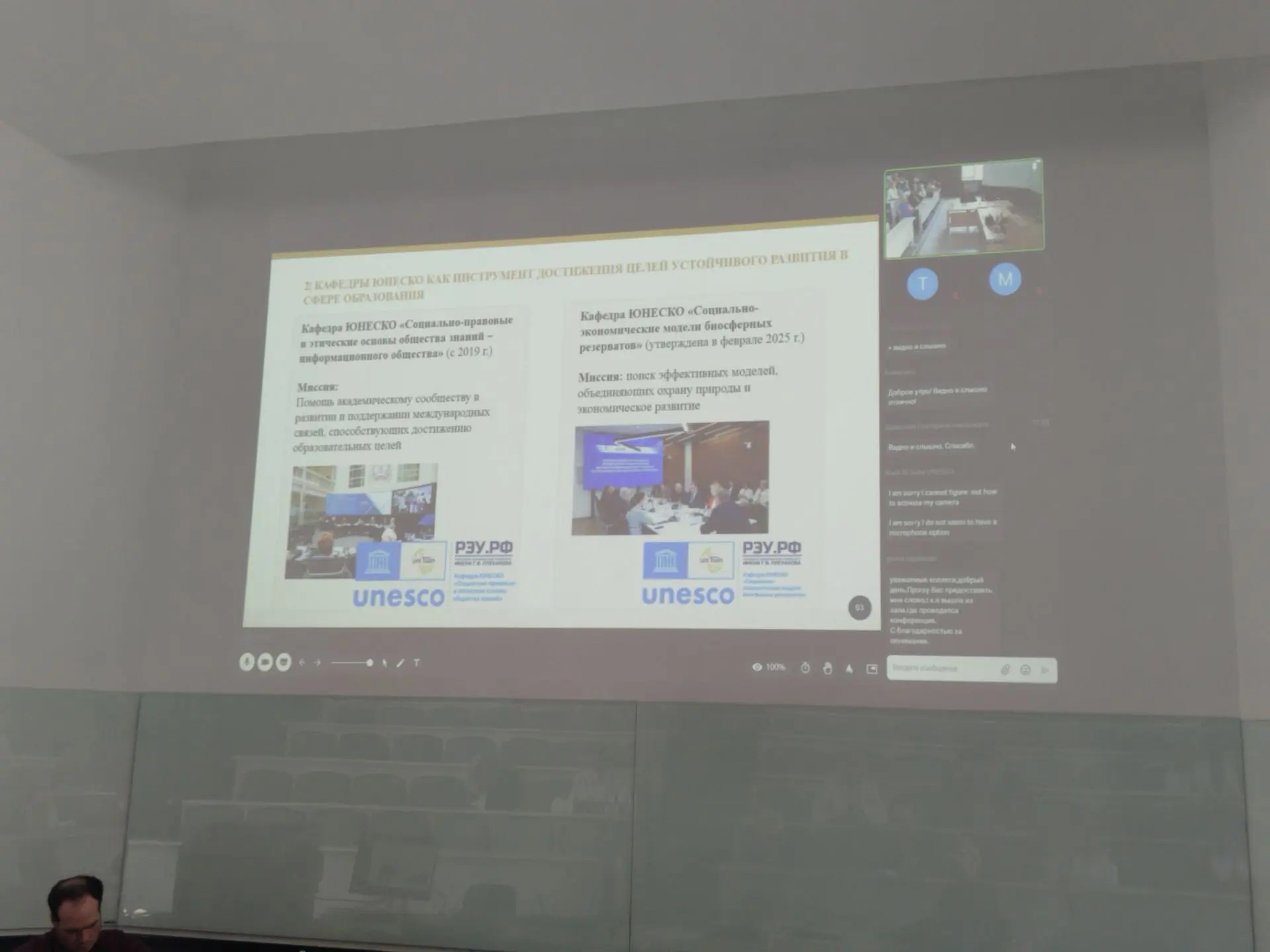
Dr. Ivan Lobanov, Rector of Plekhanov Russian University of Economics, Chairman of the Coordinating Committee of UNESCO Chairs of the Russian Federation and Chairman of the UNESCO Chair "Socio-economic Models of Biosphere Reserves". In his letter, Dr. Ivan Lobanov outlined the strategic importance of higher education as a foundation for preserving the cultural code and strengthening the educational sovereignty of the country.
Nella Pruss, President of the University of Management TISBI, Director of the UNEVOC Center, National Coordinator of the UNESCO Network of Associated Schools in the Russian Federation and Head of the UNESCO International Chair for Quality Education and Training of Specialists in the Interests of Sustainable Development. Nella Pruss noted that the key task of modern higher education in the context of globalization is to find a reasonable balance between the integration of national educational systems into the global scientific and educational space and the preservation of their identity, since this balance is a crucial condition for achieving sustainable development goals and training competitive specialists.
The full texts of the speeches can be found in the Documents section.
In the main part of the event, a report on "Higher education in an international environment: influence and recognition" was presented by Dr. Viktor Kruglov. He drew attention to the fact that effective progress towards SDG 4 requires an integrated approach to the internationalization of higher education, which includes not only bringing educational programs to international standards and recognition of documents through accreditation and ratings, but also the mandatory integration of science, practice and education as a basis for creating competitive programs, while it is necessary to find a balance between global unification and preservation of national identity, as well as overcoming the risks of commercialization and bureaucratic barriers; The result of this approach should be the formation of transparent, coordinated digital platforms and international assessment mechanisms, which will allow Russian universities to become attractive training centers for the global economy.
On behalf of Dr. Ivan Lobanov, Dr. Svetlana Malkarova, Vice-rector, Director of the PRUE branch in the UAE and Co-chair of the UNESCO Chair "Societal, Legal and Ethical Frameworking of Knowledge Societies", made a report on the scientific and educational activities of the Russian University of Economics in the field of international academic mobility based on the functioning of foreign branches of the Russian University of Economics. Special attention was paid to the university's branch in the United Arab Emirates, which acts as a regional center in the Middle East and is a prime example of the successful export of Russian education.
Dr. Pavel Terelyansky, Professor, Co-chair of the UNESCO Chair "Socio-Economic Models of Biosphere Reserves" at Plekhanov Russian University of Economics, took part in the final discussion.